A planetary gearmotor should be specified from the movement the equipment must produce, not from a catalogue label chosen first. Consider a compact industrial actuator that must balance working torque with output speed and continuous thermal capacity. Its motor and reduction unit must be treated together with the supporting hardware and controller. The risk that intermittent peak torque is mistaken for a continuous rating frames the checks in this article; loaded output speed, torque demand and duty cycle are part of the necessary evidence.
01. Start with the driven mechanism
Describe motion at the output rather than choosing a motor by watts; a rotating arm and a conveyor roller impose different acceleration, friction and holding requirements. Start from the equipment drawing for the compact industrial actuator and trace how power reaches the moving part. The load at the end of that path is the relevant sizing datum; a no-load gearmotor speed is not. Compare starting, running and stopping conditions, then state which motion and force requirements must be met. This is the foundation for the objective to balance working torque with output speed and continuous thermal capacity.
02. Separate output speed from motor speed
Use the reduction ratio to connect motor operating rpm to the desired output rpm; record loaded speed, not simply no-load speed. Do not blend bench readings with machine readings. The compact industrial actuator has a particular drive installation and mechanical resistance, so measure actual output displacement, time and direction with an output tachometer, calibrated sensor or independent position gauge after the coupling is installed. Note test speed, load and ambient temperature. Compare results to the original expectation and investigate discrepancies before increasing the motor or gearbox size.
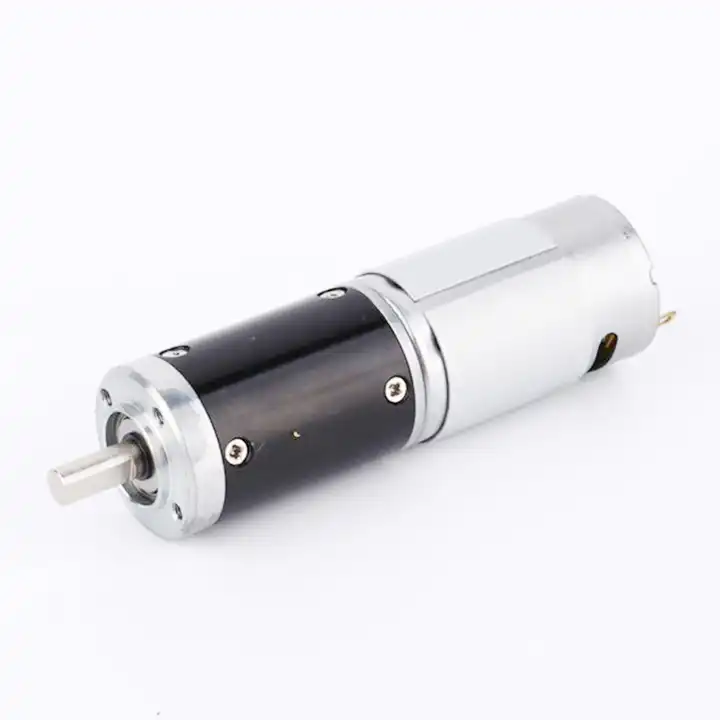
03. Build a torque envelope
Distinguish running torque from breakaway and acceleration torque; include gravity and process resistance when they apply to the mechanism. At this point distinguish the requirement from the supplier rating. The compact industrial actuator needs the objective to balance working torque with output speed and continuous thermal capacity, but a motor-side number is not automatically a gearbox-output number. Account for the speed reduction and the actual load path. Use motor operating point and gearhead continuous rating as the basis for comparing the proposed integrated gearmotor with the calculated machine demand.
04. Check the gearhead as its own component
Motor torque multiplication is not a gearbox permission slip; the gear train, carrier and output bearings each have permitted load limits. Startup, reversal and stopping are not interchangeable with continuous running. On the compact industrial actuator, identify how long each event lasts and how often it repeats. The credible failure scenario is that intermittent peak torque is mistaken for a continuous rating. Put the largest foreseeable transient in a separate line of the duty record; then verify that the controller and reduction stage are both suitable for its duration.
05. Match electrical supply to mechanical duty
Evaluate nominal voltage together with controller current limit and motor efficiency; a power source can sag at startup without the gearbox being faulty. The compact industrial actuator can impose forces that a free gearmotor does not experience. Check the position of external supports, the coupling type and the path taken by mechanical reactions. Also look at cable routing through the intended motion range. A repeatable change after installation points toward a machine-interface issue that needs resolving at its source.

The design topic Match electrical supply to mechanical duty also raises a question about the reduction unit used with the compact industrial actuator. For an overview of alternative arrangements, explore planetary gearbox configurations. Reducer-only information must still be checked against the motor, driver and exact gearbox configuration considered for this application.
06. Evaluate heat throughout the cycle
Repeated starts and low-speed high-torque holds can warm the winding even when average output power looks modest; test the complete duty pattern. For the compact industrial actuator, write an acceptance procedure that can be run again after a design revision. The procedure should log cycle duration, case temperature and surrounding air temperature, measured through a repeatable duty-cycle test with temperature logging, together with software and wiring configuration. Observe both cold startup and a representative warm operating condition. Keep the outcome connected to the exact tested gearbox and motor revision.
07. Protect the output shaft and mounting
A side-loaded pulley or unsupported arm can exceed bearing capacity before the gear teeth reach their torque limit. The troubleshooting path for the compact industrial actuator starts with the observation, not the part number. If a shaft load or transient torque outside the approved envelope is present, compare results before and after mechanical connection, provided that can be done safely. Recheck supply voltage and control commands, then investigate external load. Record which experiment changed the symptom and why.
- Confirm the measurement basis for protect the output shaft and mounting, including instrument location and units.
- Record the normal and limiting operating states of the compact industrial actuator.
- Compare the observed loaded output speed, torque demand and duty cycle with verified assembly documentation before approving this configuration.
08. Validate with instrumented trials
Measure supply current, output rpm and casing temperature on a representative machine; record the worst repeatable condition before approving production. The final output is a measurable acceptance criterion for the compact industrial actuator, not just a catalog selection. Confirm that the drive can balance working torque with output speed and continuous thermal capacity during the complete intended cycle. Document the exact hardware revision, installation method and motor operating point and gearhead continuous rating. This allows an incoming unit or later design change to be assessed on the same technical basis.

09. Numerical screening for compact industrial actuator
Consider a compact industrial actuator where the design task is to balance working torque with output speed and continuous thermal capacity. A mechanism powered for 6 seconds in a 20-second cycle has a nominal active fraction of 30%. That number alone says nothing about peak startup torque or whether the winding reaches thermal equilibrium during repeated operation. After the arithmetic, mark the assumed quantities separately from loaded output speed, torque demand and duty cycle. A purchase specification should state which of those quantities came from machine measurements and which need confirmation through motor operating point and gearhead continuous rating.
10. Verification procedure: loaded output speed, torque demand and duty cycle
The acceptance procedure for compact industrial actuator should begin with a configuration photograph, the wiring diagram and a measured mechanical baseline. Run the motion cycle while collecting loaded output speed, torque demand and duty cycle; retest after a representative warm period. Preserve evidence corresponding to motor operating point and gearhead continuous rating, including deviations associated with intermittent peak torque is mistaken for a continuous rating.
| Engineering checkpoint | Observation for compact industrial actuator | Approval implication |
|---|---|---|
| Machine duty | loaded output speed, torque demand and duty cycle | Keep the measured conditions of compact industrial actuator comparable |
| Output interface | Mounting and wiring of the compact industrial actuator | Check match electrical supply to mechanical duty against the drawing |
| Evidence basis | motor operating point and gearhead continuous rating | Confirms balance working torque with output speed and continuous thermal capacity |
| Escalation trigger | intermittent peak torque is mistaken for a continuous rating | Stop for review if the compact industrial actuator behaves outside limits |
11. What to specify when quoting this selection task
To quote a geared motor for compact industrial actuator, define what motion is required, how much load changes and how often it starts. State the objective to balance working torque with output speed and continuous thermal capacity, document loaded output speed, torque demand and duty cycle, and provide connection and output-shaft details. Treat motor operating point and gearhead continuous rating as a request for verifiable support rather than an assumed attribute.
- State the device and target: compact industrial actuator; balance working torque with output speed and continuous thermal capacity.
- Include locating pilot, shaft and flange tolerances for the compact industrial actuator installation.
- Identify voltage and feedback needed for the compact industrial actuator, including motor-driver protections.
- Connect loaded output speed, torque demand and duty cycle to peak and continuous load cases and relevant cycle timing.
- Record installation constraints for the compact industrial actuator and the planned acceptance method.
- Confirm motor operating point and gearhead continuous rating before release of the exact motor-reducer option.
12. Release decision for compact industrial actuator
For compact industrial actuator, approving a gearmotor means showing evidence that it can balance working torque with output speed and continuous thermal capacity. Retain loaded output speed, torque demand and duty cycle and motor operating point and gearhead continuous rating with the exact mounting and controller configuration. A later change in the machine that creates the condition where intermittent peak torque is mistaken for a continuous rating invalidates the original acceptance assumption.
Questions raised by compact industrial actuator applications
Why is start with the driven mechanism important for this application?
Describe motion at the output rather than choosing a motor by watts; a rotating arm and a conveyor roller impose different acceleration, friction and holding requirements. In the compact industrial actuator, the review should link that condition to loaded output speed, torque demand and duty cycle before a motor is selected.
What mistake should be avoided when considering check the gearhead as its own component?
Motor torque multiplication is not a gearbox permission slip; the gear train, carrier and output bearings each have permitted load limits. A failure to document the issue may lead to the situation where intermittent peak torque is mistaken for a continuous rating.
How should protect the output shaft and mounting be checked?
A side-loaded pulley or unsupported arm can exceed bearing capacity before the gear teeth reach their torque limit. Collect evidence during the intended movement of the compact industrial actuator, not only while the output runs freely.
What records verify the compact industrial actuator drive configuration?
Provide the machine drawing, motor control requirements, loaded output speed, torque demand and duty cycle and motor operating point and gearhead continuous rating. Explain the application goal: balance working torque with output speed and continuous thermal capacity.
To discuss balance working torque with output speed and continuous thermal capacity on a compact industrial actuator, send the measurement summary and interface drawing to [email protected]. Include the loaded output speed, torque demand and duty cycle so the motor and reduction unit can be assessed together.